Healthcare Workplace Violence Prevention: A Guide for Employers
Healthcare workplace violence prevention starts with understanding the risks and taking proactive steps to protect staff. Learn how risk assessments, employee training, clear policies, and personal safety technology can help healthcare organizations create safer work environments.

Originally published April 4, 2024. Updated November 2, 2026.
Workplace violence is an ongoing safety concern for healthcare organizations across the United States. Nurses, physicians, home healthcare workers, social workers, and other healthcare professionals can face verbal threats, harassment, intimidation, and physical assault while caring for patients. These incidents can occur in hospitals, clinics, long-term care facilities, patients’ homes, and community settings.
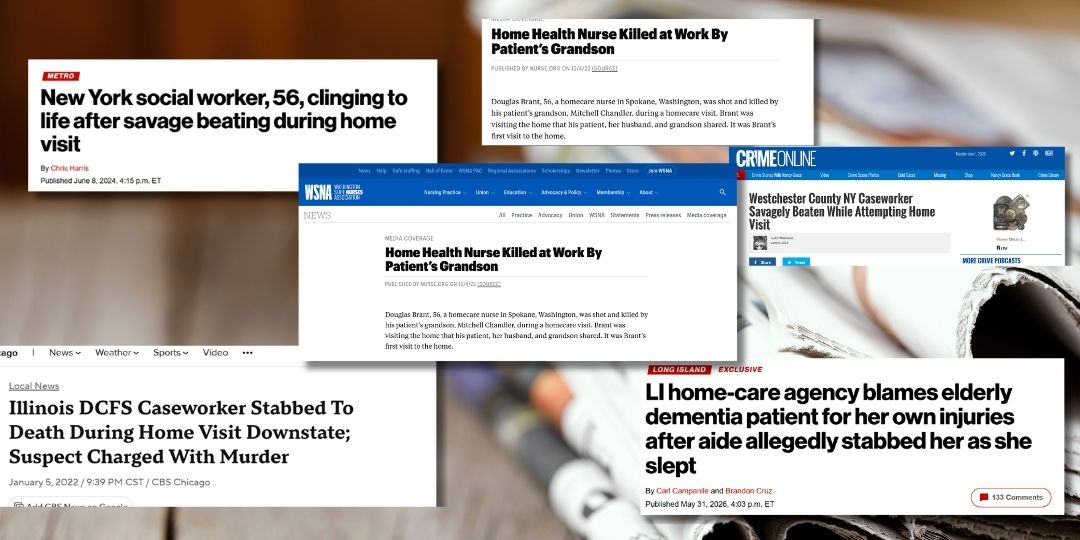
Workplace violence incidents across healthcare settings highlight why proactive safety measures are so important. To understand the risks healthcare workers face, explore our overview of recent incidents of violence against healthcare workers, including what these cases reveal about staff safety.
Protecting healthcare workers requires more than responding after an incident occurs. Employers need a proactive approach to identifying hazards, reducing exposure to violence, preparing staff for challenging situations, and ensuring employees can access help when they need it.
A healthcare workplace violence prevention program provides a framework for addressing these risks. By combining clear policies, employee training, reporting procedures, environmental safeguards, and appropriate safety technology, healthcare organizations can strengthen workplace safety and better support the people who provide care.
Why Is Workplace Violence Prevention Important in Healthcare?
Healthcare professionals often work in emotionally charged environments where patients and their families may experience pain, stress, fear, confusion, or frustration. While these circumstances do not excuse abusive or violent behavior, they can contribute to situations that require careful risk management.
The risks also vary depending on where and how employees work. Hospital staff may encounter aggressive behavior in emergency departments or during patient interactions. Home healthcare workers may enter unfamiliar environments, travel between appointments, or provide care without colleagues nearby.
Without effective prevention measures, employees may be left uncertain about how to recognize escalating behavior, report threats, or request assistance during an emergency.
A proactive healthcare workplace violence prevention plan can help organizations:
- Identify and address workplace hazards before an incident occurs.
- Establish consistent procedures for preventing and responding to violence.
- Give employees the training and tools needed to handle threatening situations.
- Encourage reporting and help organizations learn from previous incidents.
- Support employee confidence, well-being, and retention.
- Reduce disruption to patient care following workplace safety incidents.
Prevention also helps establish a workplace culture in which employees understand that threats, harassment, and physical aggression should not be accepted as part of the job.
Common Workplace Violence Risks in Healthcare
An effective prevention strategy starts with understanding the different forms of violence employees may encounter.
1. Aggression From Patients and Visitors
Healthcare workers may experience verbal abuse, threats, intimidation, or physical assault from patients and visitors. Stressful circumstances, disagreements about treatment, long wait times, and behavioral changes can contribute to difficult interactions.
Employers should identify settings and situations where aggression is more likely and establish procedures for recognizing warning signs, requesting assistance, and de-escalating confrontations when it is safe to do so.
2. Violence Against Home Healthcare and Community-Based Workers
Healthcare professionals who visit patients at home or provide services in the community face different challenges from those working in established facilities.
Employees may encounter aggressive household members, unsafe surroundings, threatening behavior, or unfamiliar environments. When working alone, they may also have limited access to immediate assistance.
Prevention measures should account for the specific risks of each visit, including pre-visit assessments, procedures for leaving unsafe situations, scheduled check-ins where appropriate, and access to emergency support.
3. Workplace Harassment and Violence Between Employees
Workplace violence prevention must also address threats, intimidation, bullying, harassment, and physical aggression involving coworkers or supervisors.
Organizations should provide clear reporting channels, establish expectations for professional conduct, and ensure concerns are handled consistently. Employees need to know how to raise concerns without fear of retaliation.
4. Risks Associated With Isolated Work
Employees working alone or away from their regular workplace may be particularly vulnerable during an emergency. They may not have a colleague nearby who can recognize a problem or call for help.
This can affect home healthcare professionals, community health workers, social workers, and staff moving between facilities.
Employers should assess how employees can communicate during an emergency, how their location can be established when needed, and what happens if a worker cannot call for help independently.
How to Develop a Healthcare Workplace Violence Prevention Program
A healthcare workplace violence prevention program should be tailored to the organization's workforce, work environments, and identified hazards. The following steps provide a practical starting point.
1. Conduct a Workplace Violence Risk Assessment
A risk assessment helps employers understand where violence may occur, who may be affected, and which safeguards are needed.
Review incident reports, employee feedback, near misses, and known workplace hazards. Consider factors such as patient interactions, staffing levels, facility layout, access to security personnel, and whether employees work alone or travel to unfamiliar locations.
For home healthcare and community-based services, assess risks associated with individual visits, travel routes, household conditions, and access to communication tools.
Use the findings to prioritize hazards and determine which prevention measures should be implemented first. Risk assessments should also be reviewed when work conditions change or new concerns emerge.
Download SoloProtect’s Lone Worker Risk Assessment Template.
2. Establish a Written Workplace Violence Prevention Plan
A written workplace violence prevention plan gives employees and managers a consistent framework for addressing threats and violent incidents.
The plan should define what constitutes workplace violence, explain how employees can report concerns, and outline the steps to take when a situation becomes unsafe.
It should also identify responsibilities for managers, supervisors, safety personnel, and employees. Include procedures for investigating incidents, documenting findings, communicating updates, and implementing corrective actions.
For organizations operating across multiple locations, make sure procedures account for differences between hospitals, outpatient facilities, residential care settings, and community-based work.
Access our Workplace Violence Prevention Checklist.
3. Train Employees to Recognize and Respond to Threats
Training helps healthcare workers recognize warning signs, understand workplace procedures, and make informed decisions when faced with threatening behavior.
Depending on their roles and risk exposure, employees may benefit from training on:
- Recognizing early signs of escalating aggression.
- Verbal de-escalation and conflict management.
- Maintaining safe distances and identifying exit routes.
- Knowing when to disengage and seek assistance.
- Using workplace communication and emergency alert systems.
- Reporting incidents, threats, and near misses.
Training should be practical, role-specific, and reinforced regularly. Employees should understand that de-escalation is not always possible and that leaving an unsafe situation and requesting help may be the appropriate response.
4. Strengthen Reporting and Follow-Up Procedures
Workplace violence prevention depends on understanding what happens before, during, and after an incident. However, employees may hesitate to report verbal abuse, threats, or near misses if they believe nothing will change.
Create straightforward reporting procedures and explain how reports will be reviewed. Encourage employees to document incidents even when they do not result in physical injury.
Managers should investigate reported concerns, identify contributing factors, and communicate appropriate follow-up actions. Reviewing incident patterns can help organizations identify recurring hazards and determine whether existing safeguards are effective.
A strong reporting culture helps employers move beyond individual incidents and address the underlying conditions that allow risks to persist.
5. Improve Environmental and Operational Safety
The physical environment and the way work is organized can influence employees' exposure to violence.
Depending on the setting, prevention measures may include improving lighting, controlling access to restricted areas, maintaining clear exit routes, reviewing security procedures, and ensuring employees can communicate with colleagues or security personnel.
Operational changes may also help reduce risk. Examples include reviewing staffing arrangements, establishing procedures for high-risk patient interactions, and creating clear protocols for home visits.
For employees working alone, organizations should determine how staff will request assistance if a situation escalates and what procedures apply when an employee misses a scheduled check-in.
6. Provide Access to Emergency Assistance
Even with strong prevention measures, not every incident can be avoided. Healthcare workers need a clear, reliable way to request help when a situation becomes threatening.
Organizations should evaluate how employees can contact supervisors, onsite security, emergency services, or designated response personnel. The appropriate approach will depend on the work environment and the level of risk.
For employees who work alone, a personal safety device with a discreet emergency alert can provide another layer of protection. Depending on the solution, employees may be able to trigger an alert without drawing attention to themselves, communicate with a trained monitoring operator, and share location information to support an appropriate response.
Technology should complement, not replace, risk assessments, training, reporting procedures, and other workplace safeguards.
7. Review and Improve the Program Regularly
A workplace violence prevention program should evolve as an organization identifies new risks and learns from experience.
Review incident reports, near misses, employee feedback, training completion, and response procedures to determine whether existing measures are working.
Involve employees in the review process, including those who work directly with patients and those who work independently in the community. Their experiences can reveal practical gaps that may not be apparent from written policies alone.
Update procedures when necessary and communicate changes so employees know what is expected of them.
What Should a Healthcare Workplace Violence Prevention Plan Include?
Although every organization has different needs, a written plan should address several core elements.
These elements provide a foundation for a more consistent approach to healthcare workplace violence prevention. Organizations should adapt them to their specific risks and review any applicable federal, state, and local requirements.
Download our Free Lone Working Policy Template.
Understanding Workplace Violence Prevention Requirements
Healthcare employers should understand the workplace safety requirements that apply to their organization and the states in which they operate.
At the federal level, the Occupational Safety and Health Administration (OSHA) provides guidance on workplace violence prevention, including hazard identification, employee training, incident reporting, and appropriate safety measures. OSHA may also address workplace violence hazards under applicable workplace safety requirements.
Some states have introduced specific workplace violence prevention requirements for healthcare employers. These may address written prevention plans, employee participation, training, incident documentation, and periodic program reviews.
For example, California's workplace violence prevention requirements under Senate Bill 553 include written plans, employee training, and incident records for covered employers, subject to applicable exceptions and requirements. Other states have adopted or are developing requirements that may differ by industry and setting.
Employers should verify which rules apply to their facilities and workforce rather than assuming a single approach satisfies every requirement. Legal and safety professionals can help organizations interpret applicable standards and identify gaps in existing programs.
How Personal Safety Technology Supports Healthcare Workplace Violence Prevention

Workplace policies, training, and environmental safeguards are essential, but employees also need practical ways to get help when prevention measures are not enough.
For healthcare workers who need a discreet way to call for help, panic buttons and personal safety alarms can provide an additional layer of protection. Explore our guide to healthcare panic buttons to learn how these devices work, which healthcare workers may benefit from them, and what features to consider.
This is particularly important for home healthcare workers, community-based professionals, and other employees who may be working without immediate support from colleagues.
Personal safety technology can help address this gap by providing access to emergency assistance when employees feel threatened or cannot safely use a phone.
Depending on the solution, useful features may include:
- Discreet emergency alerts: Allow employees to signal that they need assistance without escalating a threatening situation.
- 24/7 monitoring: Connect employees to a monitoring center with trained operators who can assess an alert and initiate an appropriate response.
- Two-way communication: Allow employees and monitoring operators to communicate when it is safe and possible to do so.
- Location information: Help authorized personnel establish an employee's latest location using available location data.
- Automatic alerts: Features such as fall detection or man-down alerts can help identify certain emergencies when an employee cannot manually request assistance.
For healthcare organizations, the right solution depends on the environments employees work in, the risks they face, and the response procedures the organization has established.
Personal safety devices are not a substitute for a comprehensive prevention program. They provide an additional layer of support when an incident occurs and an employee needs help.
Build a More Proactive Approach to Healthcare Worker Safety
Healthcare workplace violence prevention requires an ongoing commitment from leadership, managers, and employees. A written plan is an important starting point, but its effectiveness depends on how well it translates into everyday practices.
By assessing risks, establishing clear procedures, training employees, encouraging reporting, and providing access to emergency assistance, healthcare organizations can take practical steps toward reducing exposure to violence and improving staff safety.
For organizations with employees who work alone, prevention should also account for what happens when an incident occurs outside the immediate reach of colleagues or onsite security.
SoloProtect helps organizations protect employees who work alone through personal safety devices, emergency alerts, and a 24/7 Monitoring Center. Our solutions are designed to help workers access assistance when they need it, whether they are providing care in a facility, visiting patients at home, or working in the community.
Explore SoloProtect's healthcare and home care safety solutions to learn how personal safety technology can support your workplace violence prevention strategy.
Ready to strengthen your approach to staff safety? Book a demo to see how SoloProtect can help protect healthcare workers across different work environments.