Violence Against Healthcare Workers: Recent Incidents and How Employers Can Respond
Violence against healthcare workers remains a serious workplace safety concern, from threats and assaults to deadly attacks in hospitals and during home visits. Explore recent incidents, what they reveal about healthcare worker safety, and how employers can take steps to better protect their staff.
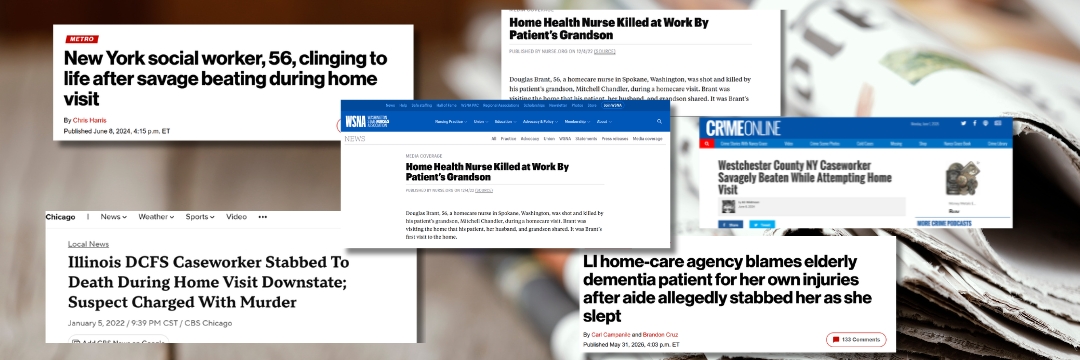
Healthcare workers spend their days caring for others, often in stressful and unpredictable situations. But for many nurses, home health aides, physicians and other healthcare professionals, the workplace can also be a place of serious personal risk.
Violence against healthcare workers can happen in a hospital, a medical office, a patient's home or during a visit in the community. It can involve threats and intimidation, physical assaults or deadly attacks. And while no two incidents are exactly alike, each raises important questions about how healthcare organizations identify risks and protect their staff.
Recent cases, including attacks on healthcare workers during home visits and deadly shootings at medical facilities, highlight why staff safety needs to be part of every healthcare organization's approach to workplace safety.
Healthcare Workplace Violence by the Numbers
Workplace violence is a serious safety concern across the healthcare industry. According to the U.S. Bureau of Labor Statistics, healthcare and social assistance had the highest number and annualized rate of nonfatal workplace violence cases of any private industry during 2021–2022. The sector recorded 41,960 cases requiring days away from work, job restriction, or transfer, representing 72.8% of all such workplace violence cases in private industry during that period.
The National Institute for Occupational Safety and Health (NIOSH) also reports that healthcare workers accounted for 48% of nonfatal workplace violence injuries despite making up approximately 10% of the U.S. workforce.
These figures capture reported injuries, not every threat, verbal confrontation or incident that goes unreported. The impact also extends beyond physical harm. Healthcare workers who experience violence may face anxiety, depression, post-traumatic stress and burnout, which can affect their well-being and their ability to provide care.
Recent Attacks on Healthcare Workers
News reports from across the country show how workplace violence can affect healthcare professionals in different settings. These incidents are a reminder that safety risks are not limited to one type of facility or role.
Home Health Nurse Held at Gunpoint During Patient Visit
In September 2025, a home health nurse in Loxley, Alabama, reportedly escaped after being held at gunpoint inside a patient's home.
The incident starkly illustrates the risks home healthcare workers face. Unlike employees working alongside a team in a hospital or clinical environment, home health nurses and caregivers can find themselves alone in unfamiliar environments where immediate assistance may not be available.
Alabama Nurse Fatally Shot Outside Hospital
In another Alabama case reported in September 2025, a nurse and mother was fatally shot outside a hospital in Tuscaloosa.
The circumstances were different from an incident involving a patient during a home visit, but the case illustrates an important point: healthcare worker safety does not begin and end inside a patient room.
Healthcare professionals can face threats while arriving at work, leaving a shift, moving between locations, or working directly with patients and members of the public.
Joyce Grayson: A Home Health Nurse Killed During a Visit
The death of Connecticut visiting nurse Joyce Grayson in 2023 brought national attention to the risks faced by home health workers and lone workers in healthcare.
Grayson was killed during a home visit. Following an investigation, OSHA cited Elara Caring and proposed a $163,627 penalty, alleging that the company failed to adequately protect employees from workplace violence.
The case raised important questions about employer responsibility, workplace violence prevention programs, risk assessment, and how healthcare organizations protect employees who work alone.
Read more:
HIPAA Journal: OSHA Proposes $163K Fine Following Death of Home Healthcare Nurse Joyce Grayson
U.S. Department of Labor: OSHA cites Elara Caring following death of visiting nurse
Doug Brant: Home Health Nurse Shot During Patient Assessment
In 2022, home health nurse Doug Brant was shot and killed while conducting an initial assessment at a patient's home in Spokane, Washington.
The incident prompted renewed discussion around home health worker safety, risk assessment, firearm awareness, and the challenges faced by healthcare professionals who work alone in the community.
Dallas Medical Center: Two Hospital Employees Killed
Healthcare workplace violence can also happen in environments where hundreds of employees may be working under one roof.
In 2022, two employees at Methodist Dallas Medical Center were killed in a shooting. The incident demonstrated how quickly a violent situation can develop inside a healthcare facility and the importance of having emergency response procedures in place.
Saint Francis Hospital Shooting
In June 2022, a gunman entered Saint Francis Hospital in Tulsa, Oklahoma, killing four people, including physicians.
Hospital shootings represent the most extreme form of healthcare workplace violence, but they exist alongside a much broader range of incidents involving threats, assaults, intimidation, and other forms of violence against healthcare workers.
What These Incidents Tell Us About Healthcare Worker Safety
These cases differ in their circumstances, but they point to several important considerations for healthcare employers.
Risk exists in multiple work settings. Healthcare workers may face threats in hospitals, outpatient facilities, residential care settings and private homes. Safety planning needs to account for where employees actually work, not just the organization's main facility.
Working alone can make it harder to get help. A home health nurse visiting a patient may not have a colleague nearby to notice a problem or respond to a call for assistance. If a worker's phone is inaccessible, taken away or unsafe to use, contacting emergency services can become even more difficult.
Risks can change during a shift. A visit that appears routine may become unsafe because of a patient's behavior, a family member's actions or an unexpected person at the location. Workers need clear guidance on when to leave, how to report concerns and how to request support.
Emergency plans need to account for different scenarios. A response to an active shooter is different from a response to a threatening patient during a home visit. Healthcare organizations should consider the specific risks associated with each role and location when developing their safety procedures.
Support matters after an incident. Physical injuries are not the only consequences of workplace violence. Employees may also need time away from work, counseling, follow-up from managers and reassurance that their concerns will be taken seriously.
Understanding the risks is only the first step. Healthcare employers also need practical measures to reduce exposure to violence, prepare employees for threatening situations, and ensure staff can access help when they need it. Read our guide to healthcare workplace violence prevention for steps organizations can take to strengthen their prevention programs.
Workplace Violence Isn't Limited to Major Incidents
Fatal attacks and shootings understandably receive significant attention, but workplace violence can take many forms. Threats, verbal abuse, intimidation, harassment and physical aggression can all affect healthcare workers.
NIOSH defines workplace violence broadly, including acts and threats directed at people while they are working. Incidents may involve patients, family members, visitors, coworkers or others.
When less severe incidents are dismissed as part of the job, employers can miss opportunities to identify patterns and address risks before someone is seriously hurt.
Healthcare organizations should encourage staff to report threatening behavior and near misses, not just incidents that result in an injury. Reports can help managers identify recurring concerns, review patient or location risks and determine whether existing safeguards are working.
A workplace culture that takes concerns seriously can also help employees feel more confident about speaking up when a situation feels unsafe.
Why Healthcare Workers Face Unique Safety Risks
Healthcare work can involve a combination of factors that make workplace violence difficult to predict and prevent.
- Emotionally charged situations: Patients and family members may be experiencing pain, fear, distress or frustration. These circumstances do not excuse threatening behavior, but they can create situations that require careful risk management.
- Unfamiliar environments: Home health workers may enter private residences without knowing who else will be present, whether weapons are accessible or whether there is a history of aggressive behavior.
- Limited access to immediate support: Staff working alone or in the community may be separated from supervisors, security personnel and coworkers.
- Time pressure and competing demands: Busy schedules can make it harder to pause, assess a situation or request additional support.
- Difficulty communicating during an emergency: A worker may be unable to safely reach a phone, explain what is happening or provide their location while a situation escalates.
These challenges make it important to build safety into everyday procedures, from assessing risks before a visit to ensuring employees have a reliable way to request help when they need it.
What Healthcare Employers Can Do to Improve Staff Safety
There is no single measure that can prevent every incident of workplace violence. Healthcare employers can, however, take practical steps to reduce risks and improve their response when an incident occurs.
Assess risks across work locations. Review the hazards associated with different roles, facilities and community visits. For home health services, this may include screening for known threats, reviewing relevant client information and establishing procedures for higher-risk visits.
Create clear workplace violence prevention procedures. Employees should understand how to report threats, when to leave an unsafe environment, how to request assistance and what happens after an incident. Policies should be accessible and reviewed regularly.
Provide practical training. Training should help staff recognize warning signs, de-escalate situations when appropriate, identify when to disengage and follow emergency procedures. Employees should know that they can raise safety concerns without being discouraged from doing so.
Establish reliable communication and escalation processes. Determine how employees working alone can request help, who receives alerts and what action should follow. A procedure is only useful if staff can use it in the situations they may encounter.
Review incidents and near misses. Look for patterns in reports and use them to update risk assessments, procedures and training. Involve employees in identifying gaps because they often understand the challenges of their roles firsthand.
For more guidance, read our related article on addressing violence and improving safety measures in the healthcare sector.
The Role of Personal Safety Technology

Workplace violence prevention plans should also consider how employees can call for help when they feel threatened or cannot safely use a phone.
Personal safety devices can give healthcare workers a discreet way to raise an alert and connect with a response team. Depending on the solution, features may include a panic button, two-way audio, location information and 24/7 monitoring.
For employees who work alone, these tools can provide an additional layer of protection. They do not replace risk assessments, training, safe working procedures or emergency services. Instead, they can support an organization's broader approach to keeping staff safe.
The right solution depends on the employee's work environment, the risks they face and how quickly support needs to be initiated.
Learn more about how panic buttons can support healthcare workplace violence prevention.
Healthcare Worker Safety Solutions
Healthcare workers should be able to focus on providing care without being left to manage personal safety risks on their own.
A strong workplace violence prevention approach combines clear policies, staff training, risk assessments, incident reporting and reliable ways to request help. For employees who work alone, personal safety technology can help bridge the gap between an incident occurring and support being initiated.
SoloProtect provides personal safety solutions designed to help protect employees working alone or in potentially challenging environments. Features such as discreet alerts, two-way audio and 24/7 Monitoring Center support can help organizations establish a clearer response process when a worker needs assistance.
Explore SoloProtect's healthcare worker safety solutions to learn more about supporting staff safety across healthcare settings.



Frequently Asked Questions
Frequently Asked Questions About Violence Against Healthcare Workers
What are the most common types of workplace violence in healthcare?
Workplace violence in healthcare can include verbal threats, intimidation, harassment, physical assaults and acts of serious violence. Healthcare workers may experience these incidents from patients, patients' family members, visitors or others while carrying out their duties.

Are home healthcare workers at greater risk of workplace violence?
Home healthcare workers face specific safety challenges because they provide care in private residences and community settings. They may encounter unfamiliar people, unpredictable environments or situations where immediate assistance is not readily available. Working alone can make it harder to get help if an incident occurs.
Why is workplace violence often underreported in healthcare?
Some healthcare workers may consider verbal abuse or threatening behavior part of the job, while others may worry that reporting an incident will not lead to meaningful action. Clear reporting procedures, supportive management and a workplace culture that takes safety concerns seriously can encourage employees to report incidents and near misses
What should healthcare employers include in a workplace violence prevention plan?
A workplace violence prevention plan should include regular risk assessments, employee training, clear reporting procedures, emergency response protocols and a process for reviewing incidents. It should also address the different risks employees face in hospitals, outpatient facilities and community settings.
How can healthcare organizations protect employees who work alone?
Organizations can establish check-in procedures, assess risks before visits, provide clear escalation protocols and equip employees with personal safety devices. Solutions with discreet alert buttons, two-way audio and 24/7 monitoring can help workers request assistance when they cannot safely use a phone.
What role does a panic button play in healthcare worker safety?
A panic button gives healthcare workers a way to discreetly raise an alert when they feel threatened or need assistance. Depending on the device and service, an alert may connect the employee to a 24/7 Monitoring Center, where trained operators can listen, assess the situation and initiate an appropriate response. Panic buttons are most effective as part of a broader workplace violence prevention strategy.